

Nexa Takes a Giant Leap with the Power of Read-Only Transaction Inputs
September 25, 2024
We’ve introduced read-only transaction inputs — an upgrade that is improving how smart contracts and transactions operate. This feature is an integral step towards the highly anticipated hard fork and offers developers exciting new capabilities for building efficient and scalable decentralized applications (dApps). So, what exactly are read-only transaction inputs, and why are they a game-changer?
Efficiency with Read-Only UTXOs
This upgrade introduces the ability to include inputs in a transaction that do not spend the underlying UTXO (Unspent Transaction Output). In simpler terms, this allows transactions to "read" data from the blockchain without consuming or modifying that data. Previously, in UTXO-based blockchains like Bitcoin, using an input would mean that the input is "destroyed" and cannot be reused. This is problematic for various blockchain architectures that require multiple users or transactions to access the same data.
Key Advantages:
- Parallel Access: Multiple transactions can now read the same UTXO simultaneously without waiting for previous transactions to clear. This eliminates the need for a “queue,” where transactions would otherwise have to line up to access the same state data.
- Efficiency in Smart Contracts: Developers can design more efficient contracts that allow for data to be accessed without unnecessary duplication or destruction of state.
- Proof of Ownership: Users can prove ownership of assets (such as tokens or Nexa) without consuming the UTXO. By importing a UTXO as read-only and signing it, they can provide proof of ownership efficiently without needing to regenerate the state each time.
Single Maintainer, Many Users
One of the major applications of read-only UTXOs addresses the "single maintainer, many users" design pattern, which is common in decentralized apps. In the past, only one user could interact with a piece of state at a time because using that state in a transaction would destroy it. Other users would have to wait, essentially forming a transaction chain where each user modifies and recreates the state. This caused scalability bottlenecks in scenarios where multiple users needed to interact with the same piece of data. Nexa’s read-only inputs solve this by allowing multiple users to access the same data simultaneously, without destroying or altering the state. For example, imagine a blockchain application where one entity maintains a central piece of state, such as a shared ledger or contract. Previously, every user accessing that data would have to modify it, leading to a bottleneck where only one transaction could be processed at a time. With read-only inputs, however, multiple transactions can access the same state without interference, paving the way for much more scalable applications.
Enhancing Smart Contracts and the Role of Group Authorities
A particularly exciting use case for read-only UTXOs is in the handling of group authorities with the BATON flag set. Group authorities define who has control over certain token operations, such as minting new tokens or creating child authorities. Previously, if you wanted to perform an operation like minting new tokens, the contract would have to consume the mint authority and recreate it in a new UTXO. With read-only inputs, however, developers can now import the authority as read-only, perform the desired operation (such as minting tokens), and leave the authority intact. This simplifies contract design and reduces the risk of accidentally "losing" authority, making operations more efficient and easier to manage. In decentralized applications like NiftyArt, which deals with minting NFTs, this improvement can significantly reduce complexity. NiftyArt previously had to manage mint authorities carefully to ensure they weren’t left in limbo if a user didn’t accept an NFT minting offer. With read-only inputs, the authority can be offered repeatedly without consuming it, vastly improving user experience and application flow.
Security and Validation: What’s Changed?
Even with these advanced features, the read-only inputs maintain a high level of security and are subject to strict validation rules. Some of the key validation rules include:
- A transaction cannot consist solely of read-only inputs. At least one traditional UTXO input must be included to ensure the transaction is valid.
- Read-only inputs cannot have a value attached to them (nValue must be set to 0), and they are excluded from the total input value during transaction validation.
- They are excluded from undo data since they don’t create any changes in the UTXO set. Moreover, read-only inputs play a unique role in block validation, using a ROTOTI (Read-Only, Then Outputs, Then Inputs) approach. This sequencing ensures that read-only inputs are conceptually evaluated before outputs and inputs, allowing for safe parallel reading of the same UTXO across multiple transactions without risking a state conflict.
Paving the Way for a Scalable Future
The addition of read-only transaction inputs is a major step forward for the Nexa blockchain. It boosts scalability, efficiency, and simplifies development, especially for applications where multiple transactions need to access the same data. As Nexa moves toward its upcoming hard fork, this feature empowers developers to create scalable decentralized apps, pushing the limits of traditional blockchain technology for a more secure and efficient future.
Keep Reading
Nexa September Highlights: Full-Node 2.2.0.0 Released
The biggest highlight in September was the release of the new Nexa Full-Node version, a stepping stone toward the upcoming hard fork and activation of the Tailstorm protocol. Tailstorm will transform...
Monthly Development Updates: August 2026
August brought several key developments, including the release of Nexa Full-Node 2.2.0.0 and progress toward activating the Tailstorm protocol, which will transform Nexa into the first hybrid of a tra...
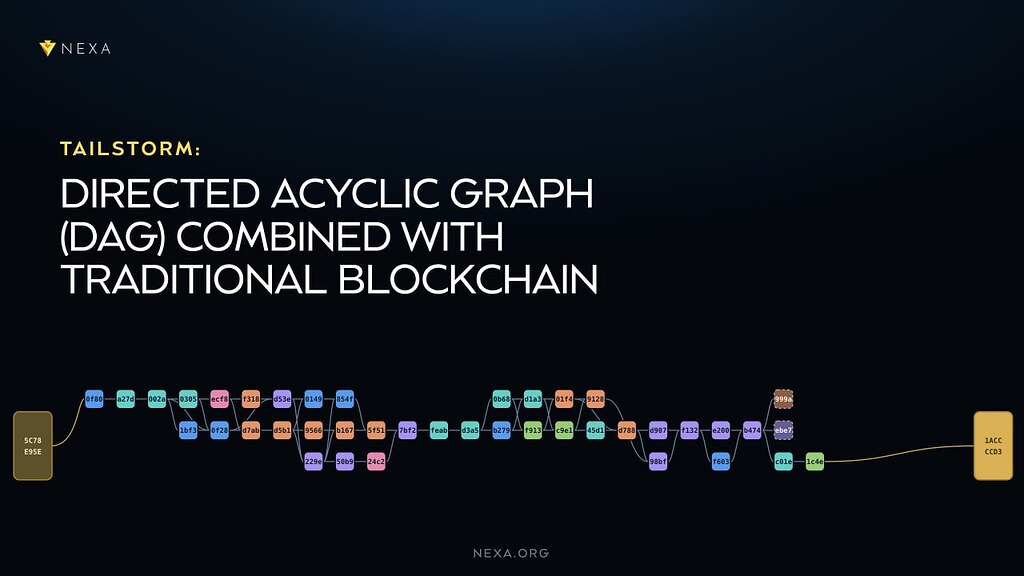
Tailstorm: Directed Acyclic Graph (DAG) Combined With Traditional Blockchain
A proof-of-work system that can confirm your transactions in 3 seconds was, until recently, just a myth. To this day, Bitcoin’s average block time is 10 minutes. What if that could improve 200 times o...
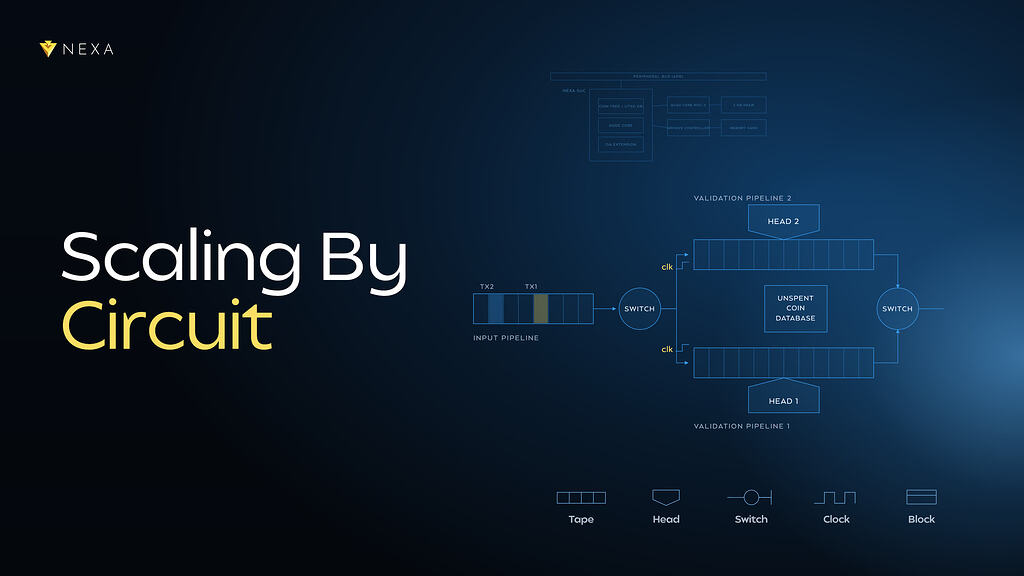
Scaling By Circuit
The second article in this series built Nexa’s validation engine out of six components, a tape, and a head, and watched it settle a payment from Alice to Bob with no software running at all. Because t...
Nexa Full-Node 2.2.0.0: The Final Checkpoint Before The Tailstorm
It is exciting to present Nexa Full-Node 2.2.0.0, an important milestone and the final checkpoint before the upcoming hard-fork with the Tailstorm integration and launch on the mainnet. We urge everyo...

Nexa Monthly Newsletter August 2026: Redesign of the Mining Puzzle
The team keeps delivering, and August brought us news of major upcoming network changes and new algorithms. NexaPoW 2.0 was introduced to the community, and Bitcoin Unlimited’s President himself expla...
Nexa: The Art of Building a Blockchain
This time, we want to revisit the ideology, goals, and legacy of the Nexa blockchain and the Bitcoin Unlimited team behind it. The journey began more than a decade ago, when a small group of passionat...
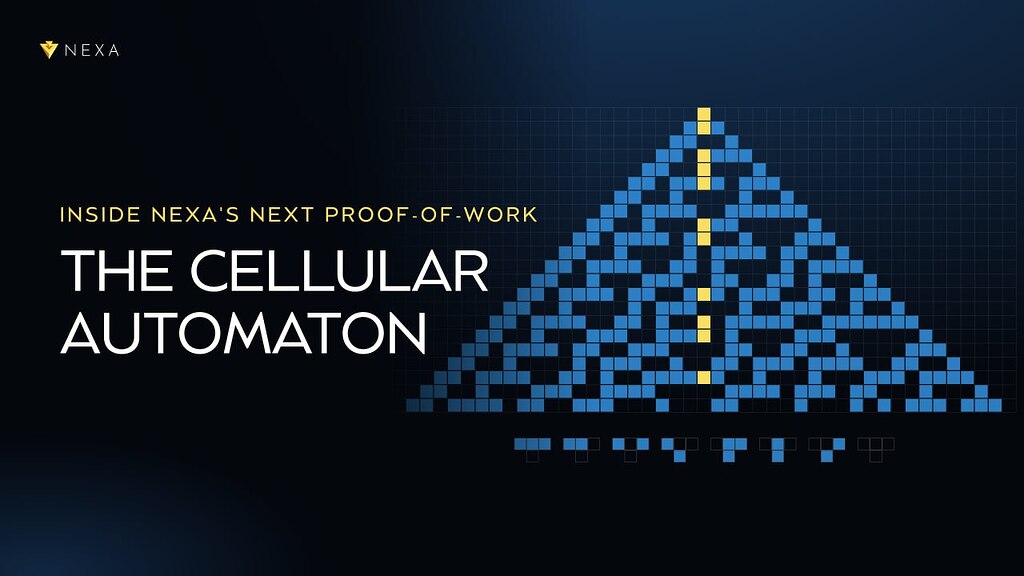
The Cellular Automaton: Inside Nexa's Next Proof-of-Work
Nexa Proof-of-Work algorithm changes are already planned and being worked towards. A Cellular Automaton was already mentioned as a coming upgrade to the new NexaPoW 2.0 version. The President of Bitco...
Monthly Development Updates: July 2026
The team is accelerating, and the development news for July 2026 shows it. This month saw more than 100 merges from thirteen repositories across Nexa GitLab. The most important delivery is Tailstorm p...