

The Future of Scalable Transactions
August 9, 2024
In recent years, countless blockchain projects have emerged offering enticing financial products, solutions and protocols, each contributing to the idea of a more equitable and fairer financial future for our world. A core value at the centre of Nexa’s mission is in creating a solution that is specifically built to last and scale adequately for the global digital economy, so that you can undoubtedly own and control your money.
It is this belief that drives our team to continue developing a robust ecosystem where this future is not only possible, but easily accessible.
Now more than ever, scalable decentralized solutions are required to transform the global financial ecosystem and existing economic landscape.
Before selecting a blockchain network and ecosystem for developing your application or investing in, it is essential to assess the network's foundational values and core functionalities. Equally important is assessing how transactions are managed in a blockchain network where trustworthy token scalability is required in order to meet the specific needs of your application or business model.
The UTXO model was a preferable choice for Nexa, for reasons extending to token scalability, transaction speed, global capacity and most importantly, privacy. With parallel processing, increased efficiency and throughput, Nexa is the most scalable, decentralized blockchain ever built on UTXO layer-1.
In this article, we will cover how transactions are created, validated, and confirmed on the Nexa network, so that readers can better understand what makes Nexa the superior choice when considering the future of your money and business.
How Transactions Are Created On Nexa
Initially, your wallet collects the required unspent transaction outputs (UTXOs) to cover the desired transaction amount. It then constructs the transaction by defining its components. The inputs reference the UTXOs being spent, while the outputs specify the recipient's address and the amount to be sent. Any remainder is sent back to your wallet in a new address. After the transaction is constructed, the wallet cryptographically signs the inputs that are being utilized. Next step? The transaction must be validated.
How Transactions Are Validated On Nexa
Once your transaction is signed cryptographically, it is broadcast to the Nexa network. The network nodes will receive the transaction and then must validate it. The job of the network nodes is to ensure that the UTXOs you used as inputs, exist, and have not been spent before, and that they have a total value which is equal to or greater than the new outputs being created.
The next step in the transaction flow on Nexa is confirming the transaction.
Confirming Transactions On Nexa
After validation, your transaction is included in the next block to be mined. Currently, our network targets a 2 minute block time.
Transaction inputs specify the UTXOs to be spent and prove ownership. Each input includes a type, which is set to 0, an outpoint that references the UTXO, an unlocking script to unlock the UTXO, a sequence number that may denote a relative lock-time, and the amount which must match the value of the UTXO.
On the other side, transaction outputs define the recipients and the amounts being transferred. Each output includes the value in satoshi and a locking script, which specifies the conditions required to spend the output.
This entire process—from creation, through validation, to confirmation—ensures that transactions on the Nexa blockchain are secure and reliable, maintaining the integrity of the network.
When you review Nexa’s tokenomics, you will notice that while our supply is the same as Bitcoin, when considering the smallest unit (Satoshis), we chose a larger primary trading unit to keep transactions straightforward, with only two decimal places.
This is not just ideal for eliminating sub decimal values, but it also supports our mission to provide a network that is primed for token scalability and fast transactions.
Simple. Seamless. Scalable. Reliable. This is what Nexa is.
Nexa Is For Building Applications And Solutions To Scale
If you’re interested in exploring more of Nexa’s capabilities, in consideration of your project or business, view our library of developer tools here and find more information on our latest marketing updates here.
Join us, as we continue to innovate and expand our ecosystem.
Keep Reading

VotePeer: Blockchain Voting on Nexa
It’s exciting to introduce you to VotePeer – an open and fair voting system on the Nexa blockchain. VotePeer hosts elections on-chain in a trustless environment where every vote requires a digital sig...
Hardware Acceleration: Nexa Node on an FPGA
In the last article we met Blitz, the card that takes signature checking off the CPU. We closed with a bigger question: what happens when you put the whole node inside an FPGA? We don’t like running a...
Monthly Development Updates: September 2026
Over the past month and into this month, development has moved forward across the Nexa ecosystem. Most activity and effort focused on our Rostrum indexer, which we’re updating and improving. We put a...
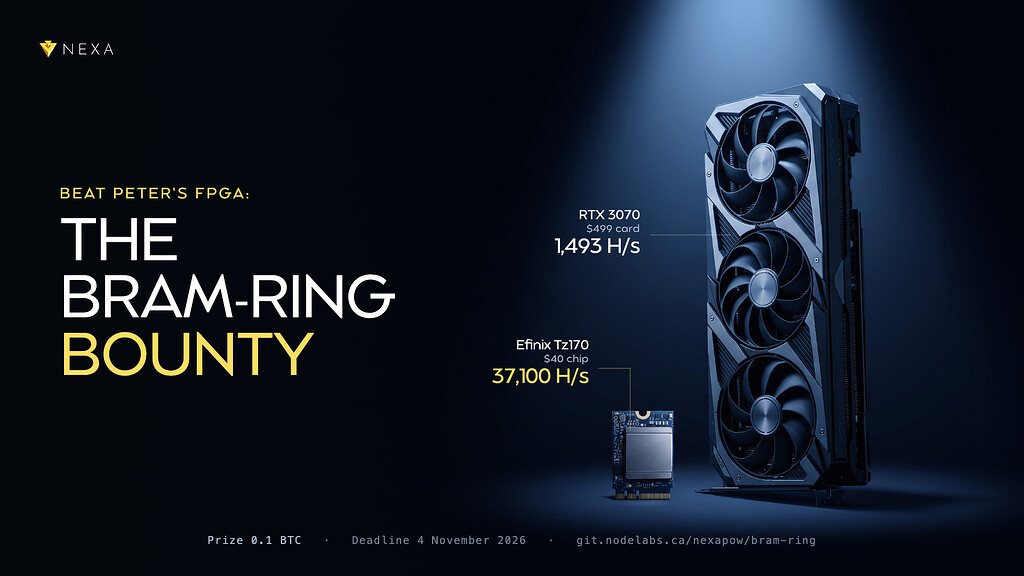
Beat Peter’s FPGA: The BRAM-ring Bounty
On 6 October 2026, Peter Rizun announced a bounty on X with a 0.2 BTC prize pool (around $16,000) for anyone who can beat the FPGA’s efficiency. The main prize is 0.1 BTC, with smaller prizes for smal...
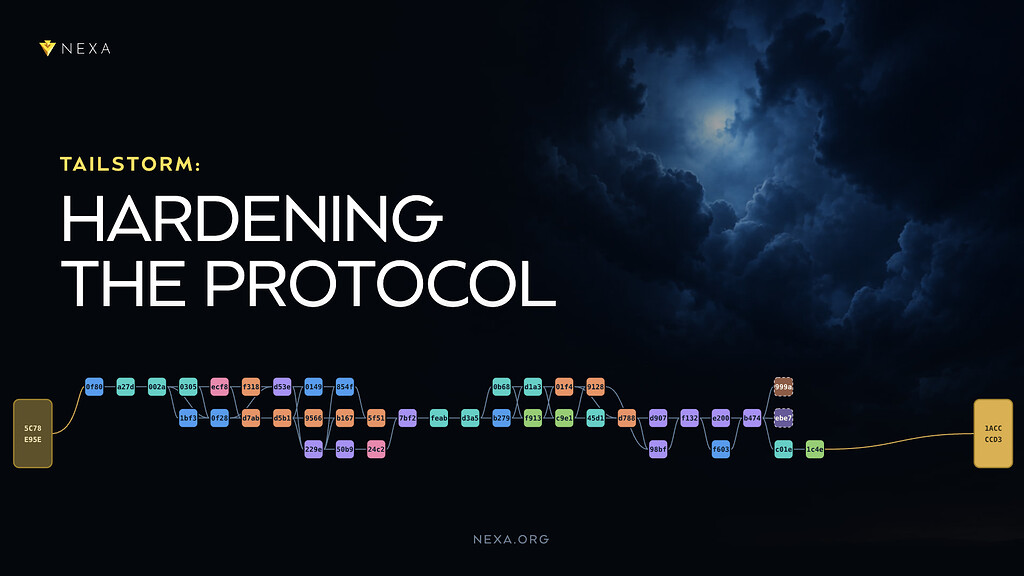
Tailstorm: Hardening the Protocol
Tailstorm replaces single 2-minute blocks with a DAG of subblocks that are tied together by a summary block, while keeping the 2-minute settlement cadence. The code already ships inside Full Node 2.2....
New Release: Otoplo Wallet 5.3.0
We’re excited to share the release of Otoplo Wallet 5.3.0 is now available. This update adds a new option to refresh vault balances and is ready for desktop and mobile platforms. While vaults have bee...
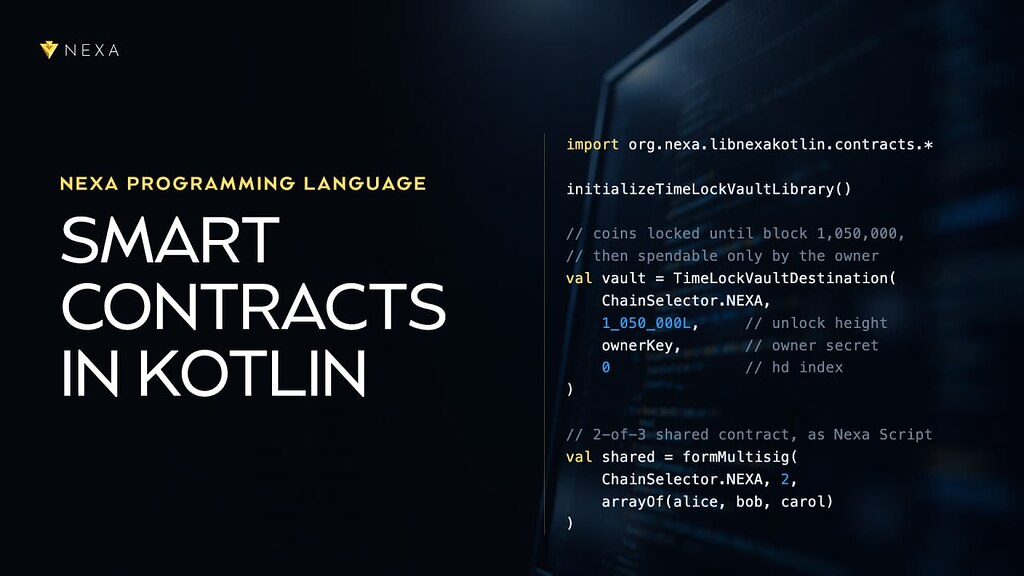
Nexa Programming Language (NPL): Smart Contracts in Kotlin
Nexa Programming Language (NPL) is a domain-specific language and compiler for writing Nexa smart contracts. Each smart contract includes rules that decide how coins can be spent. NPL lets developers...

Nexa Monthly Newsletter September 2026: Ahead of the Storm
September was a very active month, with many significant developments across the ecosystem. It started with the release of Nexa Full-Node 2.2.0.0, a major core protocol release that included preparato...
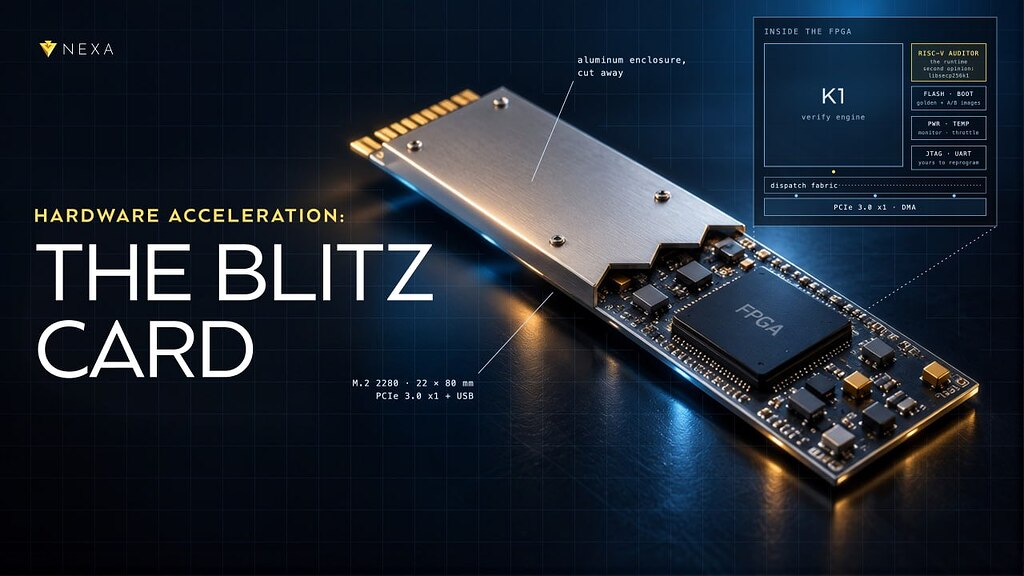
Hardware Acceleration: The Blitz Card
We’ve already explained the logic and how to build a validation engine out of six components on paper in the first three articles of the series. Now it’s time to move to the real silicon: the digital...