

Announcing NexScript 1.0 for NEXA
17 janvier 2024
NexScript Update.
We have a great update for you all. We have now released NexScript 1.0. This is a major update. It contains two major advances that will contribute significantly to contract author’s ability to write complex and powerful smart-contracts with ease. The first is an upgrade to the ability to interact with smart-contracts using the NexScript SDK. The second is an upgrade to smart-contract storage.
Advance Transaction Builder
We have upgraded to the NexScript SDK to offer more advance transaction building. This is the final piece of the puzzle of my original plan for Multiplex contracts. The new feature allows you to build transactions that use multiple different smart-contract UTXOs as inputs to a transaction. Previously, although it was possible to use multiple UTXOs as inputs, these had to use the same smart-contract code in each input. With the new upgrade it is now possible to interact smart-contracts in almost limitless ways. This is an incredibly powerful feature, as thanks to introspection functionality, smart-contracts can simulate communication between each other.
See the documentation for more details: https://nexscript.org/docs/sdk/transactions-advanced
Huge Smart-contract Storage
This is a big one! NexScript smart-contracts can now manage their own databases where the actual data is stored off-chain. This brings Nexa smart-contract capabilities a large step closer to EVMs. Smart-contracts typically have access to the amount of storage contained within the data of a transaction that spends them on UTXO chains. This is typically very limited and smart-contract authors generally do not have the ability to write contracts that allow the smart-contracts to manage their own storage, other than for very simple use cases. We have changed this paradigm. It is now possible to easily write advanced smart-contracts that have storage which can updated only as allowed by that smart-contract. The smart-contract can then use this data to constrain other on-chain behaviours.
MAST contracts are a non-generalised version of this technology, where a contract author could create a database of contract code and lock a contract such that only contract code from that specific database could be executed by the smart-contract. Our new implementation is a generalised version of this and it allows the same functionality, but the data can be used for anything, and the database is even updatable with access to it permissioned by the smart-contract itself. We have allowed the smart-contracts to create databases with up to 1,048,576 data entries, but in theory you could chain multiple databases hierarchically for more space if you needed it.
One incredible thing about this technology is that the databases are not even stored on-chain. Only a commitment to the storage is stored on-chain. This means that it is incredibly efficient on the UTXO set data size.
One obvious use case for this is for whitelists. A smart-contract could easily be created that has rules along the lines of “If you send X amount of NEXA to this address, then you can add your address to this whitelist database as a new entry”, and that whitelist could be used to automatically allow mining a new NFT for example.
The possibilities of this technology are practically endless. I don’t believe any other UTXO chain now has the same level of smart-contract capabilities now easily accessible on Nexa using NexScript.
You can find more details at: https://nexscript.org/docs/guides/merkle
A big thanks to Pat for all the work he did on NexScript. We look forward to seeing what you all can build with it. Go start playing around with it!
Continuer à lire

Nexa Monthly Newsletter September 2026: Ahead of the Storm
September was a very active month, with many significant developments across the ecosystem. It started with the release of Nexa Full-Node 2.2.0.0, a major core protocol release that included preparato...

Hardware Acceleration: The Blitz Card
We’ve already explained the logic and how to build a validation engine out of six components on paper in the first three articles of the series. Now it’s time to move to the real silicon: the digital...
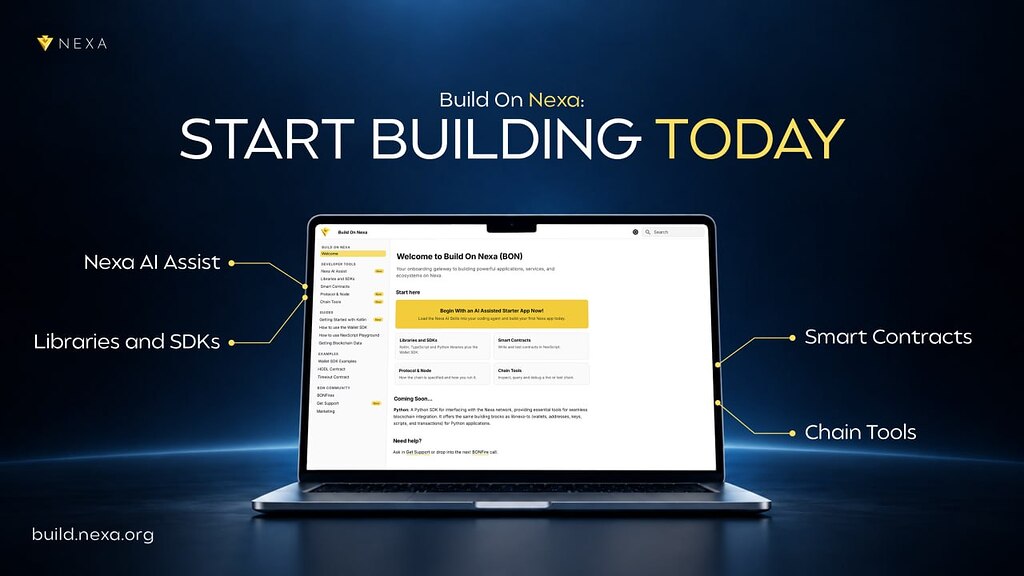
Build On Nexa: Start Building Today
Build On Nexa (BON) is your onboarding gateway to building powerful applications and services on Nexa. The site is a repository of guides, documentation, and resources for developers seeking support g...
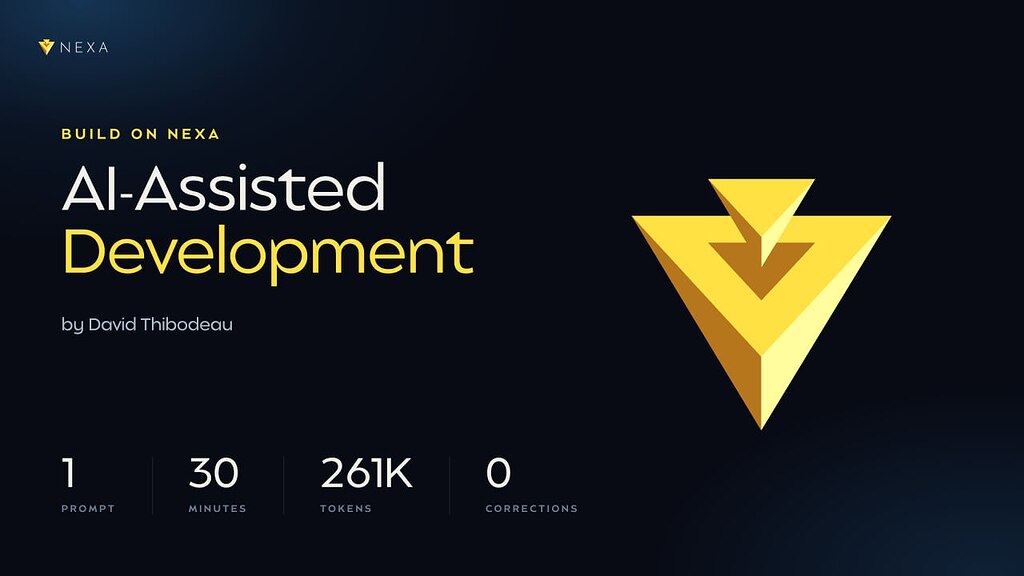
Build on Nexa: AI-Assisted Development with David Thibodeau
Today the Nexa team wants to introduce you to a couple of tools we have created for our community to assist you with building applications on Nexa. We know that some of you may be experienced develope...
Nexa September Highlights: Full-Node 2.2.0.0 Released
The biggest highlight in September was the release of the new Nexa Full-Node version, a stepping stone toward the upcoming hard fork and activation of the Tailstorm protocol. Tailstorm will transform...
Monthly Development Updates: August 2026
August brought several key developments, including the release of Nexa Full-Node 2.2.0.0 and progress toward activating the Tailstorm protocol, which will transform Nexa into the first hybrid of a tra...
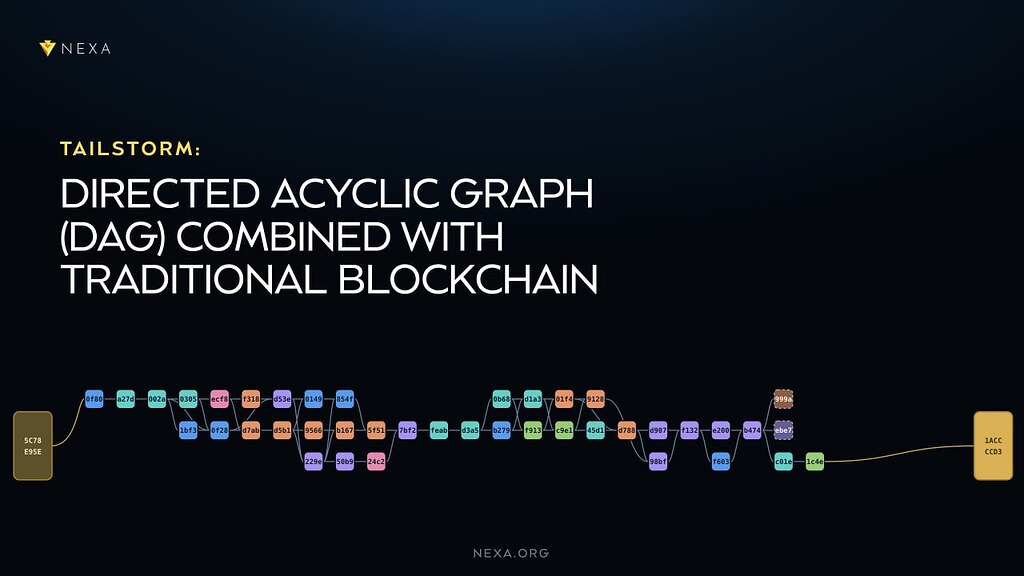
Tailstorm: Directed Acyclic Graph (DAG) Combined With Traditional Blockchain
A proof-of-work system that can confirm your transactions in 3 seconds was, until recently, just a myth. To this day, Bitcoin’s average block time is 10 minutes. What if that could improve 200 times o...
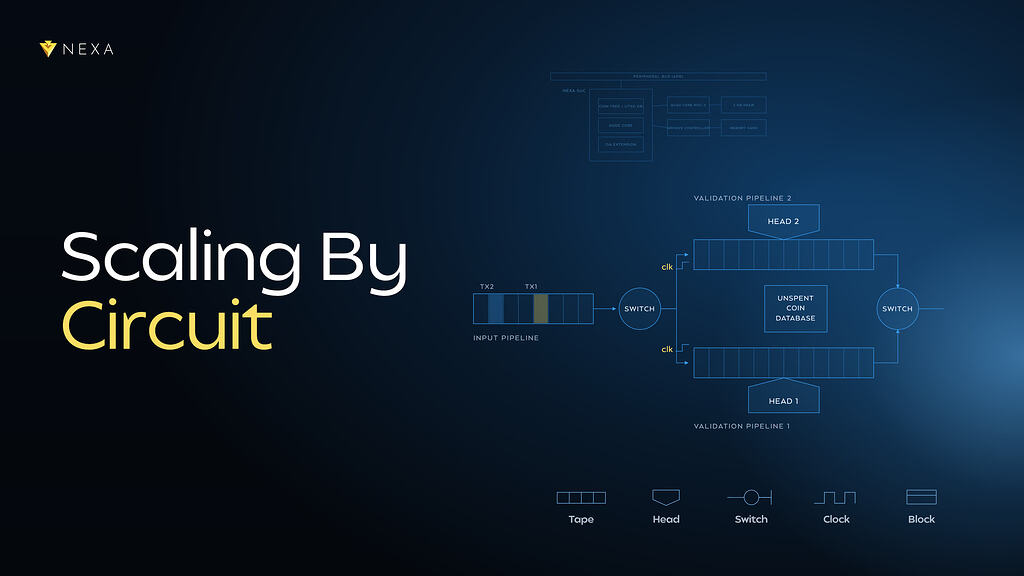
Scaling By Circuit
The second article in this series built Nexa’s validation engine out of six components, a tape, and a head, and watched it settle a payment from Alice to Bob with no software running at all. Because t...
Nexa Full-Node 2.2.0.0: The Final Checkpoint Before The Tailstorm
It is exciting to present Nexa Full-Node 2.2.0.0, an important milestone and the final checkpoint before the upcoming hard-fork with the Tailstorm integration and launch on the mainnet. We urge everyo...