

How Does Nexa Impact the Telecom Industry?
2024년 9월 6일
The telecommunications industry, despite rapid growth, innovation and technological progress in recent decades, still remains largely burdened by the limitations of a primarily centralized Web2 model. Challenges such as monopolistic practices that isolate networks among operators, provoking inadequate coverage, and high data costs with rigid pricing structures, continue to exist in the industry.
Moreover, the industry grapples with significant data security vulnerabilities and the increasingly high costs of network deployment, all while sidelining users from key decision-making processes. These ongoing issues within the industry highlight the need for more innovative solutions.
Cue in Nexa, an innovative layer 1 UTXO blockchain network poised to address these persistent problems, providing the telecom sector with scalable and efficient transaction processing capabilities that can reshape how services are delivered and agreements are managed.
Let’s explore how Nexa could impact the telecom industry.
Scalability for Telecom Microtransactions
Nexa’s token scalability supports the process of microtransactions for telecom companies, such as pay-per-use services or micropayments for data consumption, which are common in the industry. This particular use case would enable telecom providers to offer more flexible billing models and create new revenue streams. Nexa serves as a public ledger for its crypto and participant-defined tokens, the structure resembles that of a tree of blocks, with each block referencing its parent by cryptographic hash. Because of signature processing as part of the Proof-of-Work (PoW) algorithm, the blockchain contains considerably more cumulative PoW, constrained at the GPU level, than any other UTXO blockchain. The advantages of the decentralized P2P network ensures that transactions are quickly validated and transmitted.
Telecom companies are increasingly relying on microtransactions to support various pay-per-use services, such as data consumption or pay-per-minute voice services. These microtransactions, while small in value they are typically high volume, require a full-node network that can handle a large number of transactions simultaneously without compromising on speed or security. Nexa’s miner-validated, native, token protocol has scalability which offers an ideal solution for this particular use case, enabling telecom providers to implement more flexible billing models for their customers.
Instant, Secure Settlements for Roaming and Interconnect Services
Telecom providers can leverage Nexa’s instant transaction processing for real-time settlements in services like international roaming or interconnect charges, reducing the settlement time and improving cash flow. Nexa uses a P2P gossip network ensuring transaction transmission which securely routes data through multiple nodes, minimizing the risk of interception or tampering—critical for maintaining the confidentiality and integrity of customer transactions in telecom.
The settlement capability that Nexa offers through fast TPS and scalability, can significantly improve cash flow for telecom companies looking to reduce the time it takes to receive payments and improve overall operational efficiency. Additionally, blockchain usage may help telecom providers avoid the costs associated with delayed settlements, such as interest charges or penalties incurred.
As the telecom industry continues to evolve with the growing demands of the modern world, Nexa stands out as a powerful and ideal partner for driving innovation and delivering superior services to customers through seamless token scalability. With global capacity on our network and a dedicated team with a proven track record for developing cutting edge technology, Nexa is poised to be a market disruptor in the years to come.
Learn more about what Nexa can do for your business by browsing our articles and getting plugged in with our community.
계속 읽기

Beat Peter’s FPGA: The BRAM-ring Bounty
On 6 October 2026, Peter Rizun announced a bounty on X with a 0.2 BTC prize pool (around $16,000) for anyone who can beat the FPGA’s efficiency. The main prize is 0.1 BTC, with smaller prizes for smal...
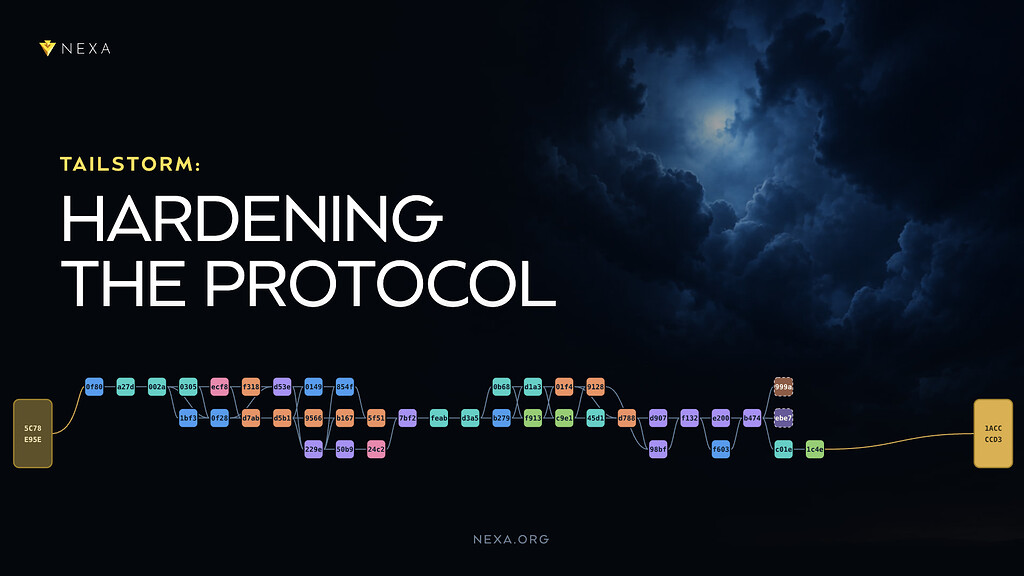
Tailstorm: Hardening the Protocol
Tailstorm replaces single 2-minute blocks with a DAG of subblocks that are tied together by a summary block, while keeping the 2-minute settlement cadence. The code already ships inside Full Node 2.2....
New Release: Otoplo Wallet 5.3.0
We’re excited to share the release of Otoplo Wallet 5.3.0 is now available. This update adds a new option to refresh vault balances and is ready for desktop and mobile platforms. While vaults have bee...
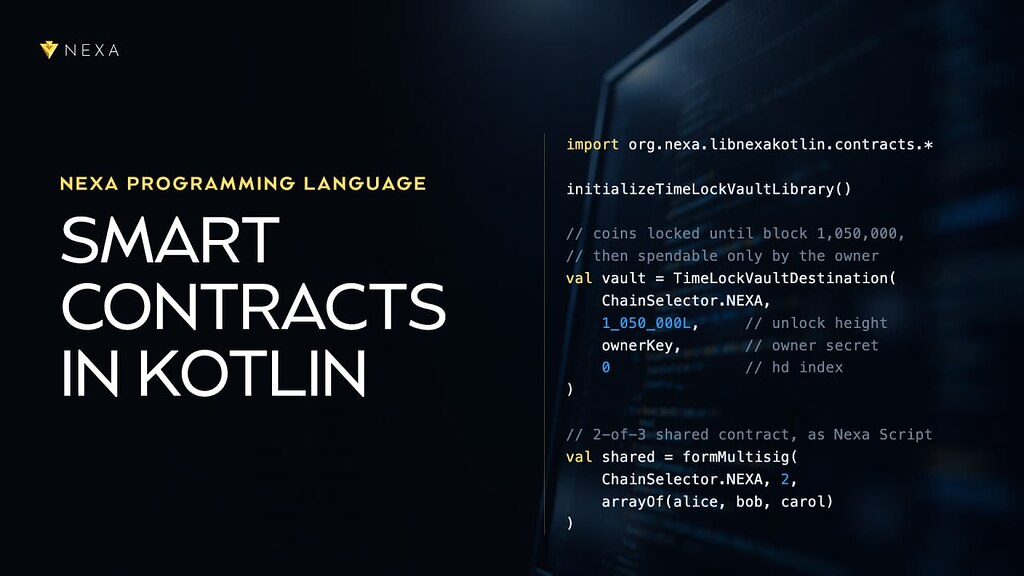
Nexa Programming Language (NPL): Smart Contracts in Kotlin
Nexa Programming Language (NPL) is a domain-specific language and compiler for writing Nexa smart contracts. Each smart contract includes rules that decide how coins can be spent. NPL lets developers...

Nexa Monthly Newsletter September 2026: Ahead of the Storm
September was a very active month, with many significant developments across the ecosystem. It started with the release of Nexa Full-Node 2.2.0.0, a major core protocol release that included preparato...
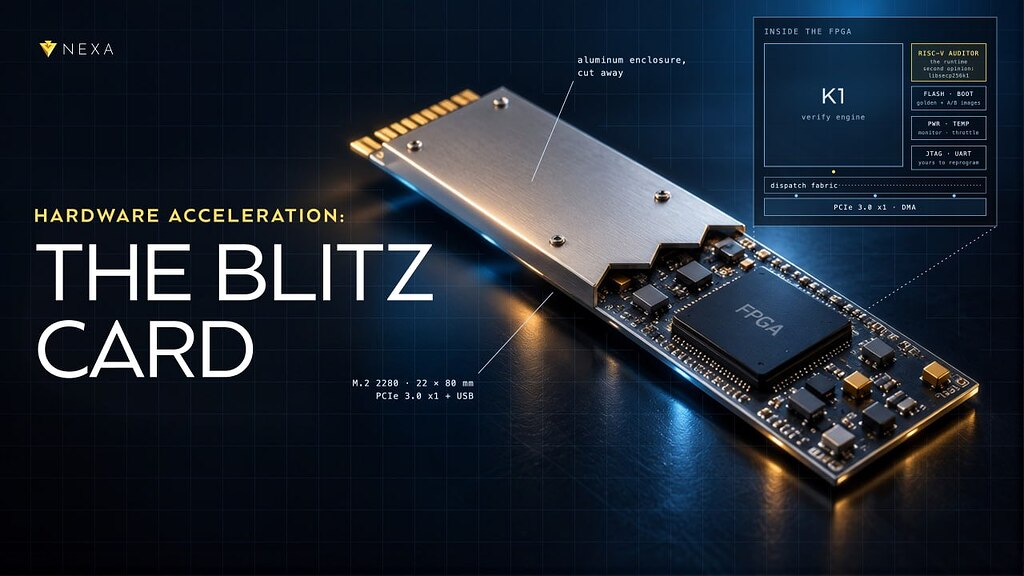
Hardware Acceleration: The Blitz Card
We’ve already explained the logic and how to build a validation engine out of six components on paper in the first three articles of the series. Now it’s time to move to the real silicon: the digital...
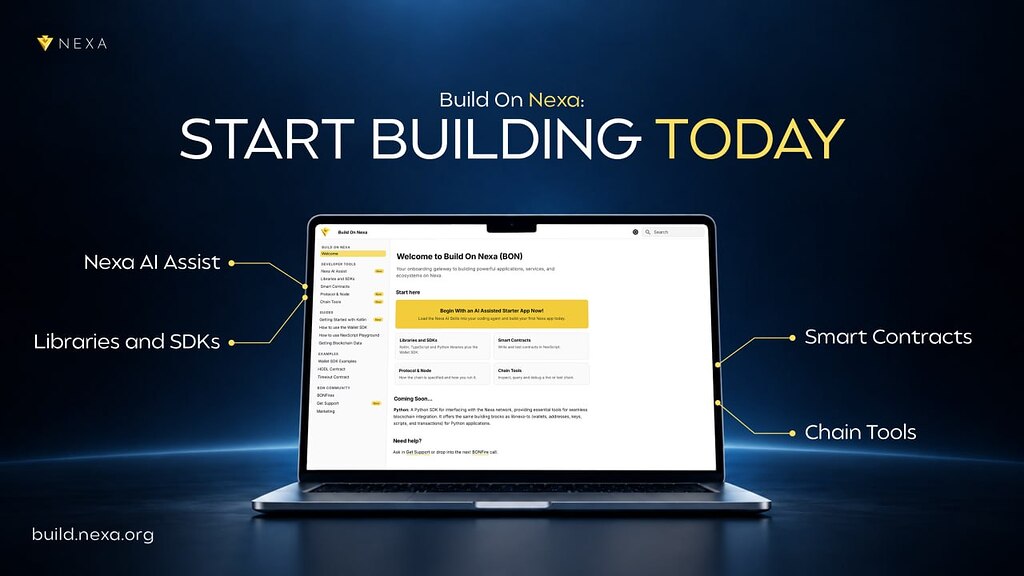
Build On Nexa: Start Building Today
Build On Nexa (BON) is your onboarding gateway to building powerful applications and services on Nexa. The site is a repository of guides, documentation, and resources for developers seeking support g...
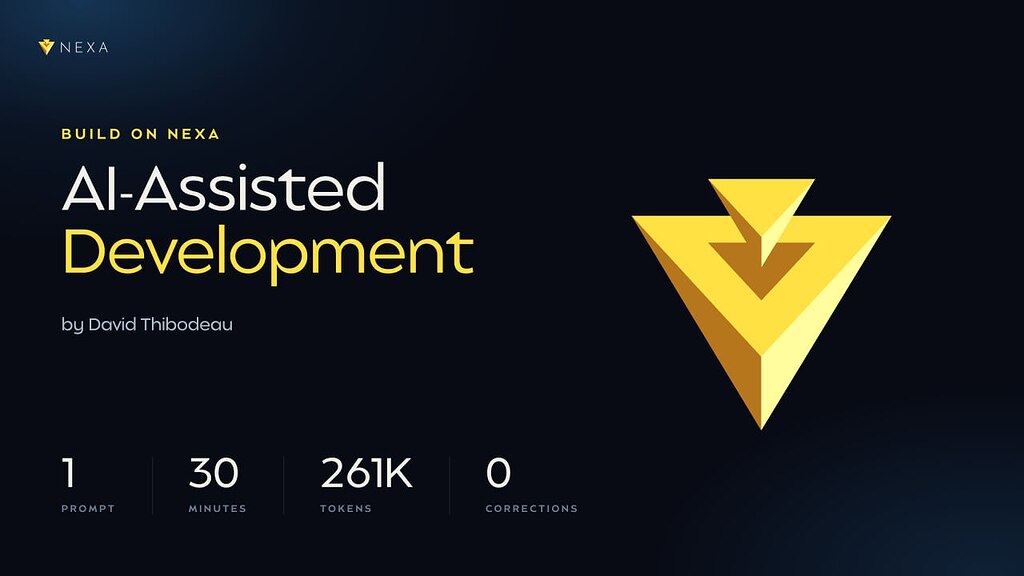
Build on Nexa: AI-Assisted Development with David Thibodeau
Today the Nexa team wants to introduce you to a couple of tools we have created for our community to assist you with building applications on Nexa. We know that some of you may be experienced develope...
Nexa September Highlights: Full-Node 2.2.0.0 Released
The biggest highlight in September was the release of the new Nexa Full-Node version, a stepping stone toward the upcoming hard fork and activation of the Tailstorm protocol. Tailstorm will transform...